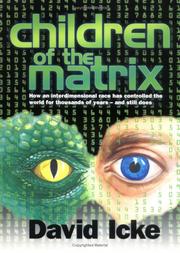
Children of the Matrix
David Icke · 2001
Children of the Matrix (2001) is David Icke’s follow-up to The Biggest Secret — the volume where the reptilian thesis meets the veil: humanity inside a designed reality, farmed rather than governed. It is the codex’s vocabulary of ‘the Matrix’ and the frequency cage in paperback form.
The codex is speculative fiction; this source and the record below are real.
WHAT IT SAYS
The veil, named
Icke’s frame in this book is the manufactured reality itself — the matrix of perception that keeps the farm invisible to the farmed. The codex’s ‘veil’ and ‘frequency fence’ panels translate this directly.
Mythology meets pop culture
Written two years after the Wachowskis’ film, the book rides the matrix image into the genre’s mainstream. The codex’s note: the metaphor was always older than the movie — and Icke’s version is where the mythology’s strain runs.
The farm vocabulary
‘Harvest,’ ‘feed,’ ‘farm’ — the codex’s panels on the feeders take their nouns from this book. The Grounded Edition maps the borrowing page by page.
WHERE IT CAME FROM — THE RECORD
Published by Icke’s own Bridge of Love imprint in 2001. It consolidates rather than advances his thesis — the record of its influence is in the genre’s vocabulary, not in any documentable claim.
HOW THE CODEX USES IT
Chapter VII’s soul-trap and frequency-fence sections draw on this book’s frame. The Grounded Edition keeps the shelf-talk honest: the codex’s prison imagery is Icke’s matrix with the serial numbers filed off.
QUESTIONS READERS ASK
What is Children of the Matrix about?
David Icke’s 2001 follow-up arguing humanity lives inside a designed perceptual reality — the reptilian thesis extended into a farm-and-veil cosmology.
How does it relate to The Matrix film?
It borrows the film’s image for the genre’s older idea — the manufactured reality — and pushed the vocabulary into the conspiracy mainstream.
Is any of it verifiable?
No more than its predecessor — it is mythology synthesis. Its vocabulary’s spread, however, is documented across the genre.
Why does the codex shelve it?
Because the codex’s veil, fence and farm vocabulary descend from it — and the Library’s job is to show the reader where the codex’s words came from.
SOURCES AND FURTHER READING
Wikipedia · Amazon · X · Google