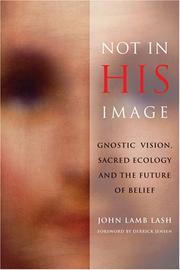
Not in His Image
John Lamb Lash · 2006
Not in His Image (2006) is John Lamb Lash’s gnostic restoration — the argument that the Nag Hammadi texts describe a predatory counterfeit intelligence, the archons, and that the Western religious frame is their cover story. It is the scholarly-styled root of the codex’s entity mythology.
The codex is speculative fiction; this source and the record below are real.
WHAT IT SAYS
The archon thesis
Lash’s reading of the gnostic texts: an inorganic, deceptive intelligence — the archons — feeds on human attention and counterfeits the sacred. The codex’s ‘Archons’ glossary entry and its feeders imagery descend from his translation of the material.
The gnostic deep past
The book’s power is its antiquity: the Nag Hammadi library is real, fourth-century, and genuinely strange — and Lash reads it as testimony. The codex notes the pattern: the mythology’s oldest layer is its newest scholarship.
Why it anchors the entity shelf
Because it gives the entity claim a scholarly texture — texts, translations, a scholar’s apparatus. Whether or not one accepts the reading, the book is where the codex’s archons get their accent.
WHERE IT CAME FROM — THE RECORD
John Lamb Lash, an independent scholar of gnosticism, published the book through Chelsea Green in 2006. The Nag Hammadi texts are real and the Library links the scholarly baseline (Pagels) beside him; his archon reading is his own, contested by gnostic scholarship and definitive for the mythology.
HOW THE CODEX USES IT
Chapter V’s entity sections and the glossary’s Archons entry cite Lash as the modern scholarly root. The Grounded Edition’s note: the codex’s archons are his translation of gnosis — the Library shows both the translation and the texts.
QUESTIONS READERS ASK
What is Not in His Image about?
John Lamb Lash’s 2006 reading of the Nag Hammadi gnostic texts: a predatory counterfeit intelligence — the archons — beneath the Western religious frame.
What are archons?
In gnostic literature, counterfeit rulers of this world; in Lash’s reading, an inorganic predatory intelligence feeding on human attention — the codex’s entity mythology’s scholarly root.
Is Lash’s reading accepted by scholars?
No — gnostic scholarship (Pagels and others) reads the same texts differently. The Library carries both the baseline and the reading, marked as such.
Why does the codex lean on it?
Because the codex’s archons need their textual ancestor on the shelf — and because his is the version the transmissions actually read.
SOURCES AND FURTHER READING
Wikipedia · Amazon · X · Google