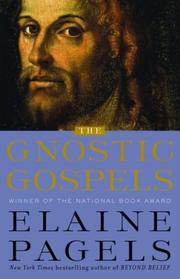
The Gnostic Gospels
Elaine Pagels · 1979
The Gnostic Gospels (1979) is Elaine Pagels’ landmark introduction to the Nag Hammadi library — the buried fourth-century texts whose view of this world as a counterfeit ruled by false gods is the oldest layer of the codex’s mythology. It is the scholarly baseline the entity shelf is measured against.
The codex is speculative fiction; this source and the record below are real.
WHAT IT SAYS
The buried library
Pagels’ account: a jar of codices found at Nag Hammadi in 1945, carrying the gnostic alternative — a world ruled by a counterfeit god, a divine spark trapped in humanity, salvation as knowledge. The codex’s archon mythology is this material’s modern costume.
The oldest veil
The gnostic texts’ claim — that the visible world is a managed illusion — is the codex’s oldest ancestor, seventeen centuries before the posters. The Grounded Edition’s note: the veil has always had a literature.
Why she is the baseline
Because Pagels is the field’s reference — the scholar who brought the texts to the general reader without turning them into a system. The Library’s rule: where the mythology reads the ancient texts, the scholar of record is on the shelf beside it.
WHERE IT CAME FROM — THE RECORD
Published by Random House in 1979; National Book Award, 1980. Elaine Pagels is a Princeton professor of religion. The Nag Hammadi library itself is documented archaeology — the codices are in Cairo, the translations are public, and Pagels’ introduction remains the standard text.
HOW THE CODEX USES IT
Chapter V’s entity sections and the glossary’s Archons entry cite Pagels as the scholarly ground under Lash’s reading. The Grounded Edition’s frame: the mythology’s oldest layer, presented by its most careful scholar.
QUESTIONS READERS ASK
What are the Gnostic Gospels?
Pagels’ 1979 introduction to the Nag Hammadi codices — fourth-century gnostic texts describing a counterfeit world ruled by false gods and a divine spark trapped in humanity.
What is the Nag Hammadi library?
Thirteen leather-bound codices found in Egypt in 1945 — the surviving gnostic library, and the oldest documentable layer of the codex’s entity mythology.
Are the gnostic texts about archons?
Yes — the texts name archons as the counterfeit rulers of this world. Lash’s modern reading builds on them; Pagels’ scholarship is the Library’s baseline for what the texts actually say.
Why does the codex shelve Pagels beside Icke?
Because the mythology’s archons descend from the texts she introduced — and the Grounded Edition’s rule is to show the scholarship beside the mythology that borrows it.