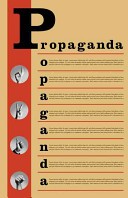
Propaganda
Edward L. Bernays · 1928
Propaganda (1928) is Edward Bernays’ open description of the craft he invented — public relations — written by Freud’s nephew as a manual for ‘the conscious and intelligent manipulation of the organized habits and opinions of the masses.’ It is the one book on this shelf that announces itself.
The codex is speculative fiction; this source and the record below are real.
WHAT IT SAYS
The invisible government line
Its opening paragraph is the most quoted sentence in the field: “The conscious and intelligent manipulation of the organized habits and opinions of the masses is an important element in democratic society.” Bernays meant it as professional doctrine, not warning — the codex files it as both.
The engineer of consent, self-described
Bernays writes calmly about ‘invisible government’ and ‘leaders we never heard of’ steering public taste — the grid’s media layer, described in 1928 by the man selling it.
Why it anchors the shelf
Because it needs no interpretation. The Library’s rule is that the record should embarrass the claim or support it on its own; Propaganda does the mythology’s work in the author’s own words.
WHERE IT CAME FROM — THE RECORD
Horace Liveright published it in 1928; Bernays was then America’s leading public-relations counsel, fresh from campaigns for presidents and cigarette brands. The book is in print, its author’s career is exhaustively documented, and its influence on both marketing and the critique of marketing is the record.
HOW THE CODEX USES IT
Chapter I’s destabilization argument and the Grid’s media panels both cite Bernays as the documented foundation — the one transmission that never needed to hide its sources. The Grounded Edition presents him first for a reason: start where the author admits it.
QUESTIONS READERS ASK
What is Propaganda by Edward Bernays about?
A 1928 manual of public relations — how organized opinion is formed and steered — written openly by the field’s founder, Freud’s nephew.
What did Bernays say about invisible government?
That ‘the conscious and intelligent manipulation of the organized habits and opinions of the masses is an important element in democratic society’ — the book’s opening claim, meant as doctrine.
Is Propaganda still relevant?
It is the founding text of the PR industry and a standard citation in media studies — its vocabulary describes the modern attention economy almost without revision.
Why does the codex lead with it?
Because it is the mythology’s media chapter with a byline and a publisher — the documented baseline the wilder claims are measured against.
SOURCES AND FURTHER READING
Wikipedia · Amazon · X · Google