Origin
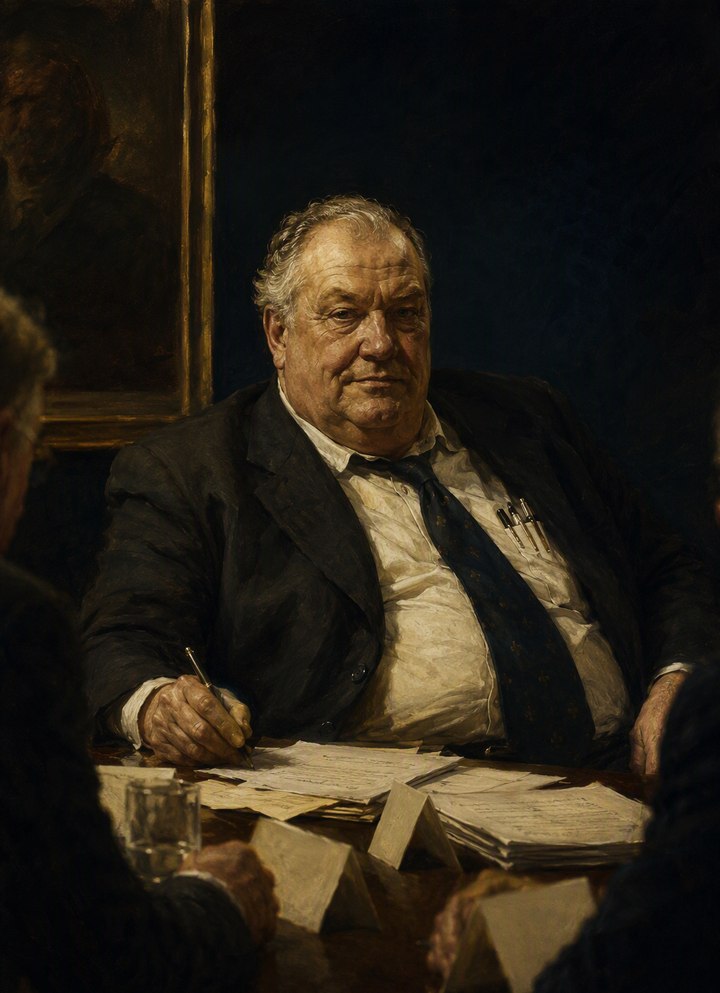
In the codex's telling, a caucus secretary's son who learned at the door of his father's meetings that the motion matters less than the minutes — and that whoever writes the minutes owns the meeting forever. He is said to have convened his first standing committee at seventeen. It has never adjourned.
The Rise
His rise is told in foundations: the institute, the forum, the dialogue, the retreat — each one outliving its purpose by decades, each one's letterhead surviving its founders. The mythology insists the circuit is the plan's skeleton. The annotators note that the circuit is documented — the conferences exist, the guest lists leak — and file the difference between a network and a plan.
Current Assignment
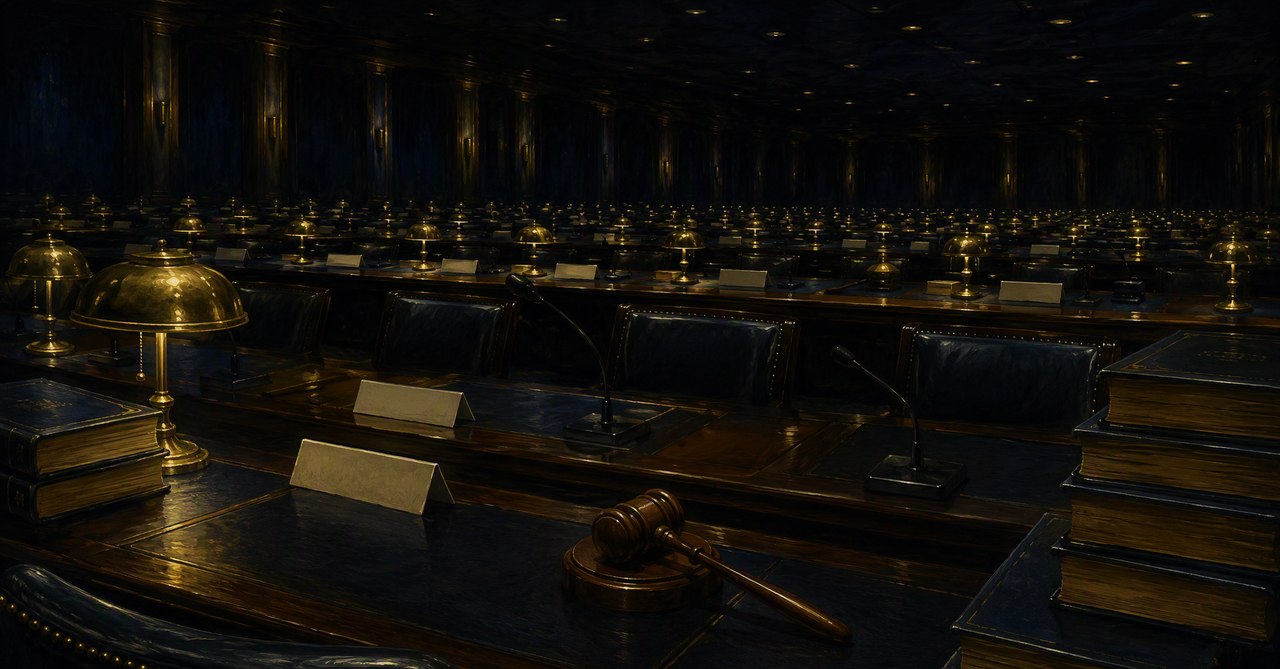
He holds Seat V for the plan's continuity: the Organizer keeps the seats filled, the agendas circulated, the off-years funded. When a front of the plan falters — the codex's panels are blunt about this — the Standing Committee is where it is re-seated.
The Ritual Contract
His ritual contract is written in attendance rolls: a covenant that no one ever resigns, that departure is recorded as 'regrettably unable to attend,' and that the minutes of the first meeting are read aloud at every hundredth. The transmissions draw it as a signature that renews itself.
Known Sayings
Weaknesses & Tells
His tell: the institution whose founding no one can date — the forum that was always there. His weakness: the attendance roll is the one document the codex says can be requested — and the Shift, in the mythology's terms, is the meeting the members stop attending.
AN INVENTED FIGURE — ANY RESEMBLANCE TO ANY REAL PERSON, LIVING OR DEAD, IS COINCIDENTAL AND UNINTENDED