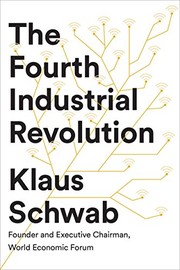
The Fourth Industrial Revolution
Klaus Schwab · 2016
The Fourth Industrial Revolution (2016) is Klaus Schwab’s book on the fusion of physical, digital and biological technology — AI, robotics, gene editing, sensors — and the governance lag it creates. It is the WEF’s most-read text and the canon’s favorite admission that the future is being planned by someone.
The codex is speculative fiction; this source and the record below are real.
WHAT IT SAYS
The fusion thesis
Schwab’s claim: this revolution differs from the last three in speed and scope — the blurring of the physical, digital and biological. His anxiety is real and stated: governance is not keeping up.
Why the canon adopted it
Because it is the founder of Davos describing transformation as something done to populations by institutions. The mythology’s reading — ‘the plan, in his own words’ — requires no editing of his, which is exactly why the Grounded Edition prints both.
What it actually recommends
Adaptation frameworks, values guidance, institutional agility — the register of a management author, not a program. The gap between the vocabulary and the vehicle is the canon’s fuel.
WHERE IT CAME FROM — THE RECORD
Published by the World Economic Forum/Crown Business in 2016; Schwab founded the WEF in 1971. The book is widely reviewed and translated; the critique of it — as thin management literature — and the mythology’s embrace of it are both part of the record.
HOW THE CODEX USES IT
The technology-trap panels quote Schwab’s fusion language directly. The Grounded Edition’s note: the vocabulary is his; the trap is the codex’s. The reader should never have to guess which is which.
QUESTIONS READERS ASK
What is the Fourth Industrial Revolution?
Klaus Schwab’s 2016 book on the fusion of physical, digital and biological technologies and the governance lag it creates — the WEF founder’s framework for the present decade.
Does Schwab call for a world government in it?
No. The book recommends adaptation frameworks and values guidance; it contains no program of world government. The mythology’s reading and the text differ, and the codex shows both.
Why do conspiracy readings center this book?
Because it is the WEF’s founder describing planned transformation in institutional language — the canon’s ideal raw material: real institution, real vocabulary, open interpretation.
Where does the codex use it?
In the technology-trap panels and Chapter VII’s disclosure section — always with the source attached, per the Grounded Edition’s rule.
SOURCES AND FURTHER READING
Wikipedia · Amazon · X · Google