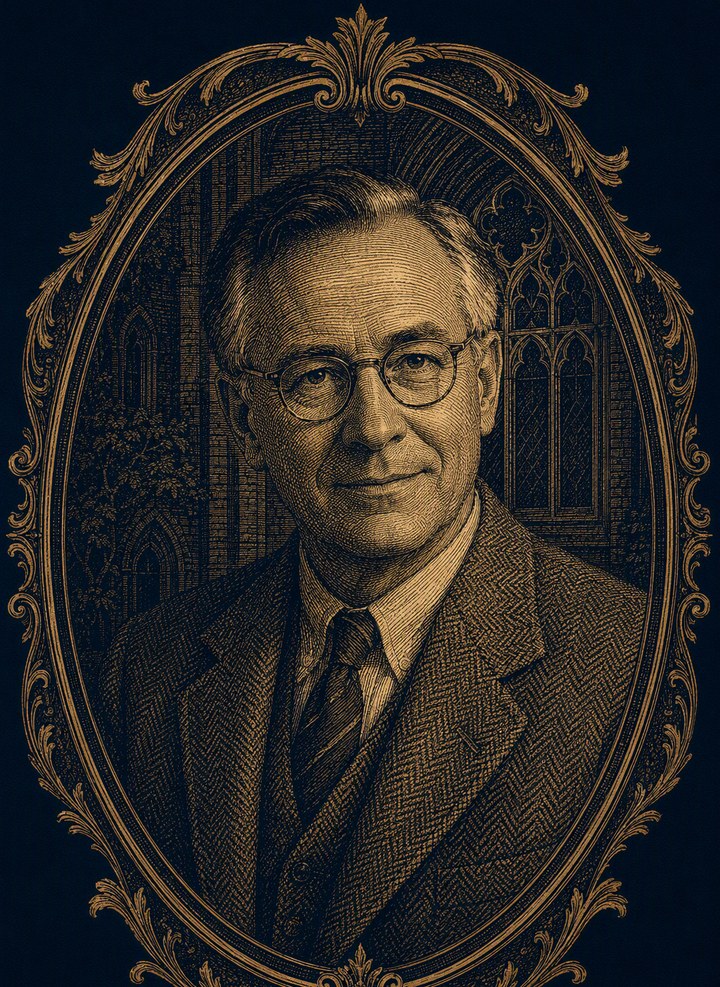
A Georgetown professor at the School of Foreign Service who wrote a 1,300-page history of the twentieth century — and, inside it, the calmest pages ever published about how Anglo-American establishment networks actually worked. The canon reads those pages as a confession from inside the club. The record shows a scholar's complaint about accountability — not a member announcing a plan.
The Canon’s Reading
In the mythology, Quigley is the crowned citation: the insider who named the network, praised its methods, and — when his book briefly went out of print — was 'silenced by the publisher.' The transmissions cite Tragedy and Hope the way lawyers cite statute: a respected professor, a major publisher, pages of named names and dated meetings.
The Record
The famous pages — Tragedy and Hope (1966, Macmillan) contains real scholarly history of real circles — the Milner Group and its successor networks — written with a historian's calm by a man who knew the seminar rooms personally.
The quoted sentence — His observation that capitalism and communism's financial patrons could be 'drawn from the same source' has been quoted by the canon ever since. His own complaint was scholarly: these networks shaped events without accountability, and without historians being allowed to write about them.
The suppression legend — When Macmillan declined to reprint in the 1970s, Quigley charged suppression in public letters — and the canon filed the charge as fact. The record: a commercial decision, loudly disputed by the author, later reversed — the book has been in print for decades since.
The student — Bill Clinton, his former student at Georgetown, praised him by name at the 1992 Democratic convention. The canon reads it as membership confirmed; the record shows a student crediting a teacher.
The Afterlife
The canon adopted Quigley because he is real — and the Grounded Edition keeps the adoption papers on the page: respected professor, major publisher, named names — and a trimmed context. His history of the establishment is genuine scholarship; the mythology's reading of it as the plan's confession is the codex's cleanest case study in what an angle can do to an archive. He wrote from inside the seminar, not from the barricade.
The Family(2019)The documentary of the real, networked Fellowship — the prayer circuit that actually convenes the powerful, filmed with access.TMDB · YouTube
The Power of Nightmares(2004)Curtis on the politics of fear — how manufactured nightmares become instruments of governance.TMDB · YouTube
The Precedents file real people, dead and documented — the canon’s
reading on one side, the public record on the other. For the codex’s invented figures, see
the Directorate.