THE ROSTER · THE DIRECTORATE
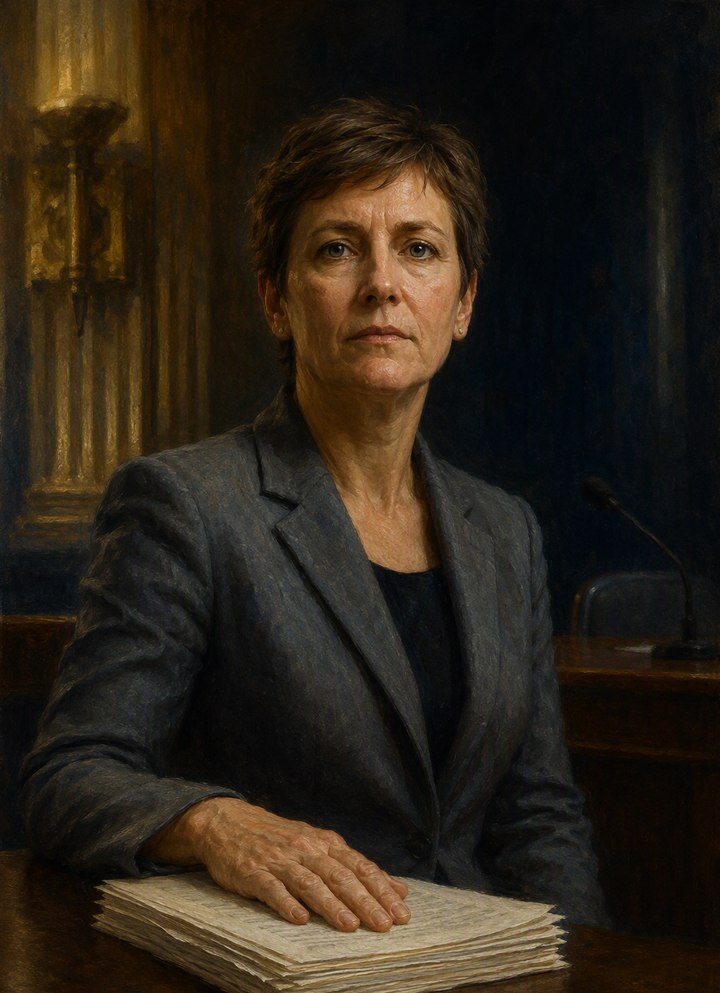
Commissioned portrait of Rowena Frost (fictitious figure)
Commissioned portrait — rendered from the archive's description
SEAT XI · THE DIRECTORATE

Rowena Frost

THE DEFECTOR
Front: The turning point — the seat that walked away

The Directorate's eleventh seat, and the archive's only file compiled from the other side: the codex's invented defector, who carried her own dossier out. The mythology runs on insiders who never talk; Frost is the codex's answer — the one who did, and whose file is the only one in this cabinet marked as open testimony.

Origin

In the codex's telling, the Standing Committee's minutes secretary — Hallowell's own clerk — who kept the attendance rolls for eleven years and then walked the minutes out of the windowless floor and into the record. The codex does not give her a reason. It files the document instead: testimony, dated and signed.

The Rise

Her rise is the cabinet's only reverse chronology: the file reads backward from the hearing table to the first meeting she ever minuted. The mythology calls her the weak link. The annotators call her the strongest page in the cabinet — the codex's reminder that the real record has a witness room, and that the hearings below actually happened.

Current Assignment

She holds Seat XI for the turning point: the mythology's own counter-move inside the plan. The transmissions' closing pages — awaken, remember, resist; do not comply, do not consent — are, in the codex's telling, her minutes read aloud. The plan's last document is a resignation letter. The record's first is her testimony.

The Ritual Contract

Her contract is the only one publicly filed: she published it herself — the covenant, the signature, the witnesses — because, the codex says, a contract read into the record is a contract ended. The transmissions draw it as a signature in an unfamiliar hand: her own.

Known Sayings

“I kept the minutes. Then I read them aloud.”
“You want to know who was in the room. Everyone who was ever silent.”
“The first page of the resistance is an attendance roll.”

Weaknesses & Tells

Her tell: the file that names its sources — the only dossier in the cabinet that can be checked. Her weakness, per the mythology's own warning: the defector's testimony is only as strong as its documents — which is why, the codex notes, hers are the only ones in the Directorate linked below.
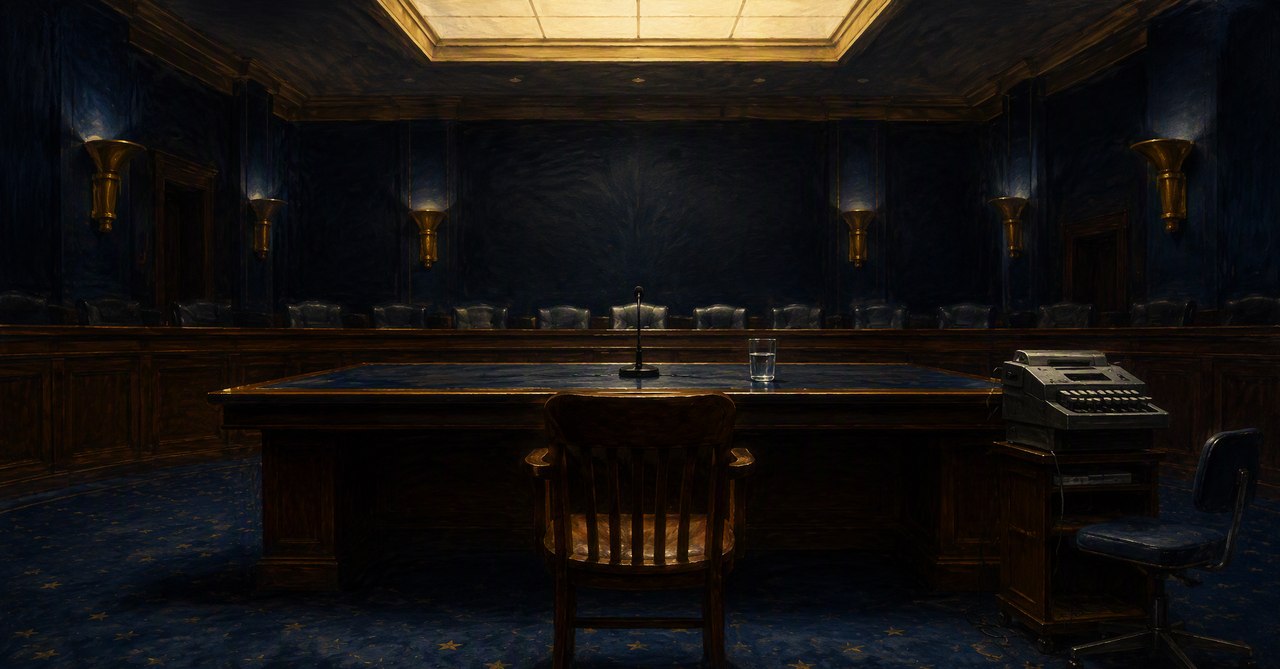
The Witness Room — the bare room with the single microphone, where the record was made
THE ENVIRONS — The Witness Room — the bare room with the single microphone, where the record was made. (An artist’s rendering; the place is invented.)
THE RECORD
The Defector embodies the canon's whistleblower hope — and its real shelf is the one time the inside actually testified: the Church Committee and the 1977 Senate MKULTRA hearings, when a real program's real officers answered real questions under oath, filed in the Library as the documented proof that exposure is not a myth. Frost is invented; the hearing room is not, and the codex's counter-plan chapter takes its vocabulary from exactly this: the record of the day someone talked.
FILED IN THE ARCHIVE
WATCH NEXT — ON SCREEN
The Insider (1999)The whistleblower procedural — the defector's file, the network's lawyers, and what it costs to talk.TMDB · YouTube
The Report (2019)The Senate's torture report, written line by line against resistance — the committee room as the last battlefield.TMDB · YouTube
Citizenfour (2014)The disclosures as they happened, in real time, in a hotel room — the most important primary document of the grid era.TMDB · YouTube

AN INVENTED FIGURE — ANY RESEMBLANCE TO ANY REAL PERSON, LIVING OR DEAD, IS COINCIDENTAL AND UNINTENDED

← Lucian AldercroftHadrian Solace →
ASK THE CODEX
A companion voice briefed on the whole book. Answers are brief, sourced, and honest about the fiction frame.
Ask me anything — a chapter, a poster, a term, a source, or where to begin.