THE ROSTER · THE DIRECTORATE
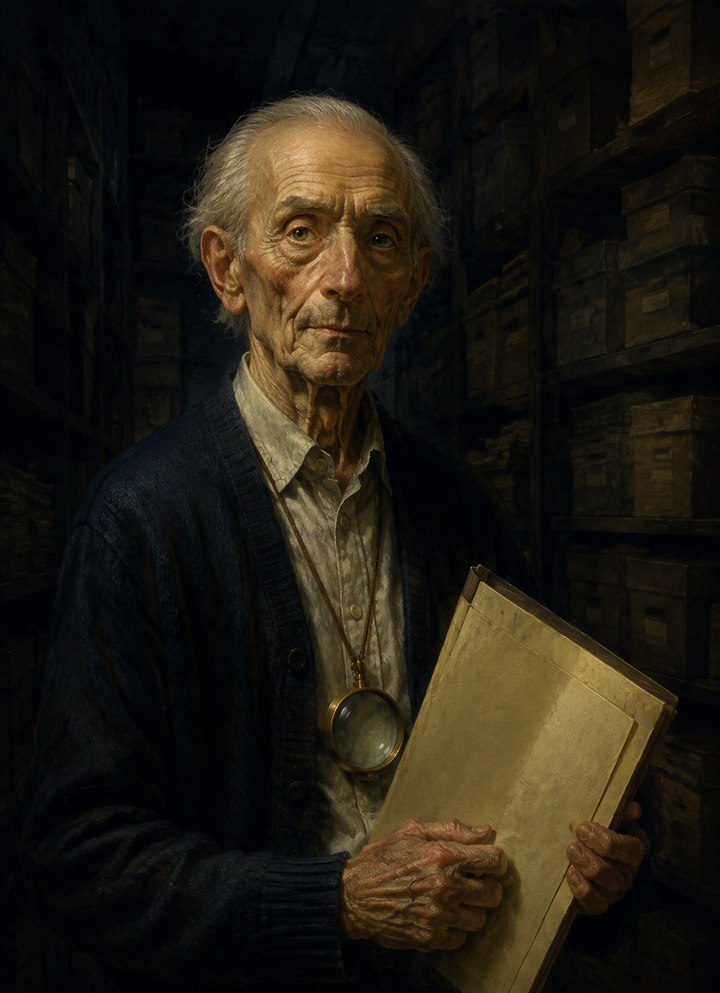
Commissioned portrait of Thaddeus Greyling (fictitious figure)
Commissioned portrait — rendered from the archive's description
SEAT VIII · THE DIRECTORATE

Thaddeus Greyling

THE ARCHIVIST
Front: The paperwork — the reports that were never meant to exist

Keeper of the Deep Stacks, the codex's invented archive of the plan's own paperwork: the studies, the scenarios, the manuals that were never meant to exist — and, the transmissions insist, leak. Greyling is the mythology's explanation for its own library: someone, after all, must have written the documents the genre is made of.

Origin

In the codex's telling, a government reports officer who spent thirty years filing studies no minister read, and was collected by the Directorate on the day of his mandatory retirement — the only exit interview ever conducted by the twelve. He is said to know the collection by heart and the catalog by memory, and to distrust both.

The Rise

His rise is told in accessions: the report that arrived unsigned, the scenario that arrived satirical and was shelved as doctrine, the manual with no author at all. The mythology reads each accession as proof of the plan. The annotators read them as the genre's supply chain — and note that the two most famous items in the Stacks are filed in the codex's own Library, with their real histories attached.

Current Assignment

He holds Seat VIII for the paperwork: the preservation and, the codex hints, the quiet release of the documents the transmissions quote. If a panel cites a study no one can find, the annotators' first question is the Stacks — and the record's first question is who wrote it, and when, and to amuse whom.

The Ritual Contract

His ritual contract is written in the margins: a covenant to preserve everything, classify nothing, and answer no question about provenance twice. The transmissions draw it as a bookplate pasted over another bookplate, forever.

Known Sayings

“Nothing is destroyed. It is filed.”
“A leak is just a document that found its reader.”
“I have shelved satire beside doctrine my whole career. They have never complained about each other.”

Weaknesses & Tells

His tell: the document with no floor under it — no author, no printing, no date — circulating as the plan's own pages. His weakness: the Stacks are shelved beside the record, and the Shift, the mythology says, is the reader checking the catalog.
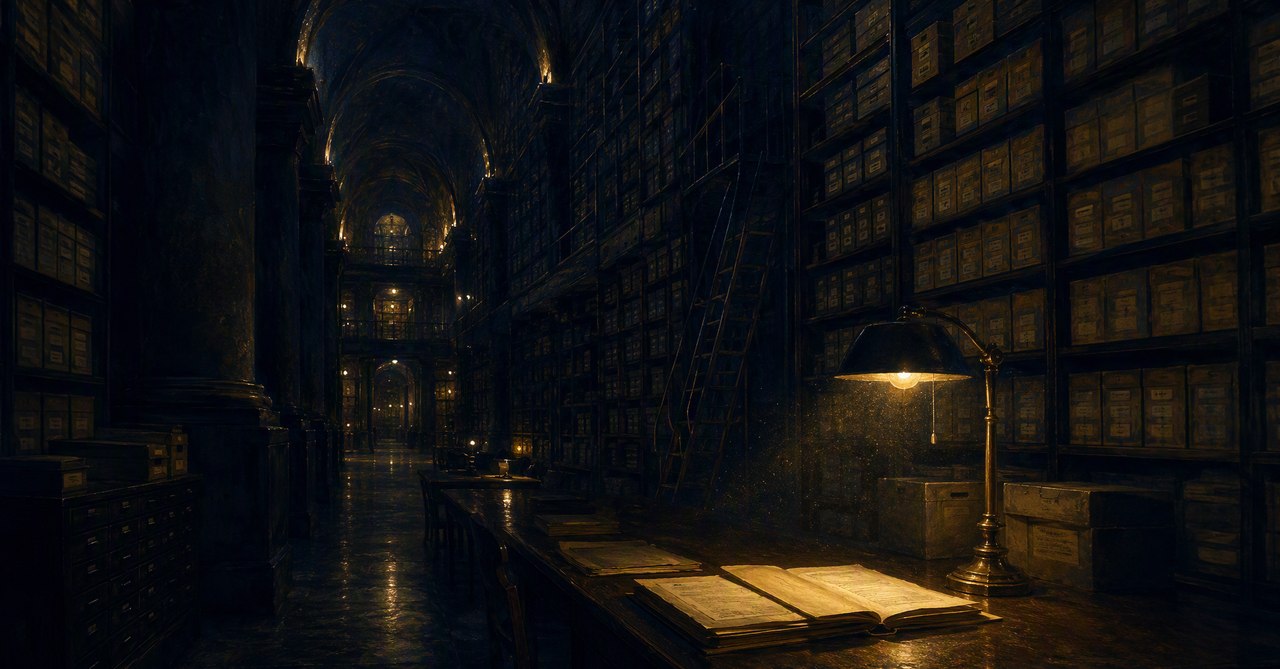
The Deep Stacks — the sub-basement where the plan's documents are said to be kept in acid-free folders
THE ENVIRONS — The Deep Stacks — the sub-basement where the plan's documents are said to be kept in acid-free folders. (An artist’s rendering; the place is invented.)
THE RECORD
The Archivist embodies the canon's document claim — that the plan's paperwork leaks into circulation. Its real shelf is the genre's two most instructive cases, both in the Library: Report from Iron Mountain (1967), the satire admitted by its author and cited as a leak ever since, and Silent Weapons for Quiet Wars, the pamphlet with no author at all. Greyling is invented; the lifecycle he presides over — text, reading, canon, afterlife — is the documented history of this archive's whole subject.
FILED IN THE ARCHIVE
WATCH NEXT — ON SCREEN
Citizenfour (2014)The disclosures as they happened, in real time, in a hotel room — the most important primary document of the grid era.TMDB · YouTube

AN INVENTED FIGURE — ANY RESEMBLANCE TO ANY REAL PERSON, LIVING OR DEAD, IS COINCIDENTAL AND UNINTENDED

← Vesper LaudenBalthazar Wren →
ASK THE CODEX
A companion voice briefed on the whole book. Answers are brief, sourced, and honest about the fiction frame.
Ask me anything — a chapter, a poster, a term, a source, or where to begin.